
Saturday, March 3, 2012

Monday, February 20, 2012

Saturday, February 18, 2012
Sunday, December 25, 2011
Friday, December 23, 2011
A Christmas Lesson

A few weeks ago I took my 4 year old son Christmas shopping. At the church we attend, our family participates in a yearly charity sponsored by Samaritan's Purse called "Operation Christmas Child". We pack a shoe box with a variety of gifts, which is sent to children in "Third World" countries. I pack one for a boy while my wife packs one for a girl.
I took my son to help me pick out the gifts. I want to instil in him the understanding that Christmas isn't about "him" getting gifts from Santa Claus, but that during this time of year it is more important to give to those who don't have as much as we do. So as we shopped, we had a conversation about what Christmas really means and how we celebrate this season as a family.
I went on to explain that Santa Claus isn't a real person but he is "pretend". I impressed upon my son that his mother and I, as well as our friends and family members buy him the gifts... not only during Christmas but all through the year. I further explained that the reason we are buying these gifts for the boys and girls is that their family and friends don't have the extra money to do so and there is really no Santa Claus to bring them presents.
I could see that he was listening intently while his little mind was processing what I was telling him. He understood what I was saying, but he still wanted to believe that Santa Claus must be real. That's what he sees on television. That's what he learns in school. That's what people are always ask him: "what do you want for Christmas from Santa?"
Since that day we have had a number of conversations about the meaning of Christmas. If you ask him now what is Christmas, he answers that it's Jesus' birthday. If you ask, he'll say that Santa Claus is pretend, although it is evident that he still wants to believe that he is real. He'll tell you that his mommy, daddy, friends and family buy him his gifts... that they don't come from Santa. I explained to him that we give each other gifts just like the 3 wise men brought gifts to baby Jesus when he was born and as a way to remember that God gave us the gift of his Son Jesus.
At four, I don't expect him to understand and accept it all. However, we're not allowing him to be conditioned by our society's values into being self absorbed and materialistic. Furthermore, I don't believe it's healthy for black children (especially boys), to be conditioned to believe that all good things come from a white man... a fat old white man with a long white beard at that. I believe it subconsciously undermines their appreciation for the efforts of their parents (especially their fathers), it further undermines their own self esteem and respect for black men as a whole, and it grooms them to be easy prey for that seemingly nice (old) white man.
In his own way, my son does show us that he has an understanding of the true "reason for the season": the celebration of the birth of Christ, the love of God, family and friends, and that it's better to give than receive. So far he hasn't asked us for even one present.
This is the Christmas lesson we want him to learn and incorporate into his life.
Merry Christmas!

Saturday, November 26, 2011
Saturday, November 19, 2011
Book Review: The Autobiography of an Ex-Colored Man
 "All the while I understood that it was not discouragement or fear or search for a larger field of action and opportunity that was driving me out of the Negro race. I knew that it was shame, unbearable shame. Shame at being identified with a people that could with impunity be treated worse than animals. For certainly the law would restrain and punish the malicious burning alive of animals." This novel by James Weldon Johnson, probably better known for writing the Black National Anthem, "Lift Every Voice and Sing" was first published in 1912. Although it is not actually his autobiography, Johnson lays out the life journey of a man born of a black mother and a white father, but who can pass for white, and the lessons he learns about racial identity in early 20th century America. These life lessons convinces him in the end that it is better to live as an "invisible", ordinary white man in America, than to embrace, nurture and utilize his God given talents and abilities in an effort to contribute to his African-American heritage and it's blossoming and unique culture.
Thought-provoking for sure, the twist and turns in the life of this melodramatic figure, did not lead me to cast a stone of judgement or shake my head in disgust (mixed with pity) towards the character, as much as it led me to understand his surrender to what is easier, rather than to struggle for what is better. He isn't the first... he won't be the last...
"he who is without sin, cast the first stone"...
Friday, November 18, 2011
Book Review: The Sport of the Gods
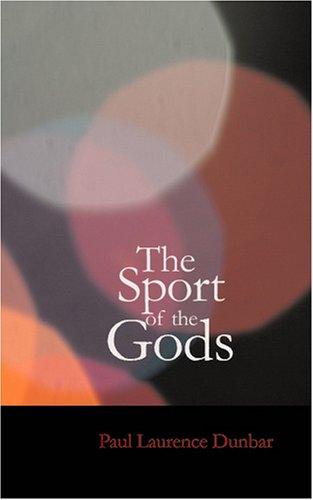
The Sport of the Gods is a novel by Paul Laurence Dunbar, better known as an African-American poet. It's an intense story about an African-American family in the post Civil War era, who are unjustly accused and ostracized for a crime they didn't commit. While the father is imprisoned, the mother, son and daughter are forced to travel north to New York, to pick up the pieces of their lives. The hardships they experience and endure causes drastic, as well as dramatic changes in their values and relationships with each other.
Once the truth is revealed, too much time and events have transpired for everything to return to the way it was before... a happier and more innocent existence for the family and those responsible for the injustices they suffered.
This novel was published in 1902 and it is indeed a classic read. It moves rather effortlessly through different situations and locations, bringing a rythmic blend to details to engage the reader as it pushes the story along. It uncovers the life and prejudices of the idyllic Southern life and juxtaposes this with the harsh realities of the urban North, also with it's own dynamics of prejudices.
Saturday, October 22, 2011
Monday, October 17, 2011
The Caine Prize for African Writing 2011

I discovered the competition for The Caine Prize for African Writing 2011 quite by accident a little while ago. I am sure many of you can relate to this. I was surfing the web, reading a variety of posts and articles and stumbled upon it. The Prize is awarded to an African writer of a short story published in English, whether in Africa or elsewhere. The first prize was awarded in 2000 at the Zimbabwe International Book Fair 2000 in Harare and it's usually awarded every July. I read this years' 5 entries, enjoyed them immensely and wanted to share them here:
- David Medalie’s “The Mistress’s Dog” (South Africa)
- Laurie Kubuitsile’s “In the Spirit of McPhineas Lata” (Botswana)
- Timothy Keegan’s “What Molly Knew” (South Africa)
- Beatrice Lamwaka’s “Butterfly Dreams” (Uganda)
- NoViolet Bulawayo’s “Hitting Budapest” (This year's winner from Zimbabwe)
Book Review: Imperium in Imperio: A Study Of The Negro Race Problem

This novel is beautifully written and utilizes imagery in a way that brings to life the essence of the characters. It lays out simply and moves easily among a variety of themes, within which a multi-layered influences propels each character towards their fate. I must admit I was astonished that such a novel was written in 1899, one that explores and discusses the issues of race in America, not only among Blacks and Whites, but also the issues around colourism within the Black community, especially in such a dynamic and dramatic way. I did not find the story line predictable and the intrigue of what would happen next fed my interest.
As someone who reads and has read a lot of books, this novel was indeed a rare gem that I found. It is among the 10 best books I had ever read, fiction or non-fiction.
Sunday, September 25, 2011
Book Review: Where Are You Really From?

What fascinated me most was the fact that he was not only the product of an extra-marital affair in the 1960's, between a white Catholic woman and a Black doctor from Ghana, but more that his mother placed him in an orphanage without her family's knowledge and then adopted him.
Tim describes his life growing up as a Black child in a predominately all white neighbourhood, dealing not only with the racist attitudes of the society around him, but also with those of the British soldiers who occupied Northern Ireland at the time. His accounts of the instances where he and his family assist the IRA in their armed struggle and his political involvement in Sinn Fein, leading to his 5 year incarceration as a political prisoner makes for interesting reading.
His volatile and deeply loving relationship with his white mother, in contrast to the rejection from his African father and siblings from that side of the family, stirs up a variety of emotions and leaves one with a few unanswered questions.
Well written, engaging, enlightening with a triumphant spirit throughout. A journey through a unique life that is well worth taking.
Sunday, September 11, 2011
9/11: Ten Years After

"Today I do not honor terrorism, reinforce fear or plot revenge. No. I pause today to commit to less violence and more peace. I choose today to be a part of the healing instead of part of the destruction. I remember today that peace begins within and love is an action."
Wayne Hicks
Saturday, September 10, 2011
Monday, September 5, 2011
Book Review: Black Rebellion-Five Slave Revolts & The Interesting Narrative of the Life of Olaudah Equiano

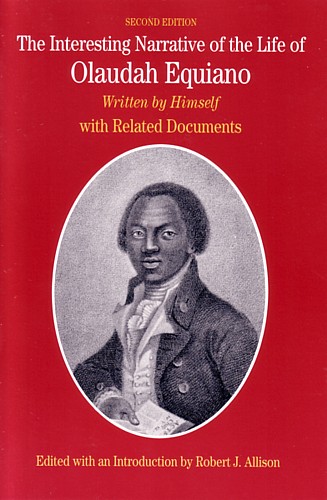
I will review both of these books in this post as they cover similar themes: the continuous struggle for freedom and dignity of African slaves in the Americas.
Black Rebellion-Five Slave Revolts
History is freeing, because knowledge gives one power. Freedom without the power of knowing is an illusion, because slavery is based on ignorance. Hence, I gained much power and became freer from reading this book. The five slave rebellions that were discussed in this text were:
- The Maroons of Jamaica
- The Maroons of Surinam
- Gabriel's Defeat
- Denmark Vesey
- Nat Turners Insurrection
Being of Jamaican heritage I was familiar with the story of the Jamaican Maroons, but had no knowledge that there was a similar Maroon insurrection in Surinam. I had also heard about Nat Turner, but didn't know the details of the insurrection he led. There is a blog I frequent with the moniker Denmark Vesey, but I never had any knowledge of the significance of the name. Now that I do, I have a deeper understanding of the relevance of it's content.
As people of African heritage in the Americas, we have always been people of rebellion. Our history, as told by us, proves this fact. We have never been childishly content with our situation, as our captors would have us believe... even today. We have continuously struggled against all odds, sometimes with success, sometimes with failure and then suffered enormous and inhuman consequences.
For me, this book provided more knowledge and therefore more power to continue with my daily struggle as a Black man in the Americas.
The Interesting Narrative of the Life of Olaudah Equiano
I recently watched for the second time the movie Amazing Grace, which chronicles the life long efforts of William Wilberforce to get legislation passed in the British Parliament to end the slave trade. One of the characters, Olaudah Equiano, was played by one of my favourite singers, Senegalese Youssou N'Dour.
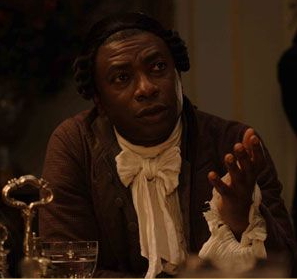
When I got my Amazon Kindle, one of the free ebooks offered was his autobiography, published in 1789. His life story and ordeal is a fascinating one. He chronicles his enslavement and journey through Africa to the coast, his experiences on a slave ship where he was brought to America and the circumstances where he was eventually able to purchase his freedom. He documents his travels to various parts of the world (including the Artic) as a sailor and the struggles, as well as the situations he had to endure, not only to survive, but also to keep his freedom throughout his life. He further lays out how his various trials, tribulations and triumphs, nurtured his deep and unwavering faith in God, which lead to his eventual conversion to Christianity.
The life of this African man would make an inspiring movie of what is possible to achieve in a cruel, oppressive and hostile world, as it was for a Black man then... and now. Amazing Grace indeed.
Sunday, September 4, 2011
Book Review: Diary of A Lost Girl - The Autobiography Of Kola Boof
 Truth is stranger than fiction! This is the best way for me to describe this book. From her childhood in Sudan, to the murder of her family, her father's family rejection of her because of her black skin, her adoption by an African-American family to her complicated relationship with Osama bin Laden, as well as her claim that she was a secret agent for the Sudan People's Liberation Army (SPLA), makes this tale appear fantastical to say the least. I understand why there is so much controversy and skeptical unbelief regarding her story.
 Her experiences with black African slavery and Arabism in Sudan and in the Arab world is revealing. When it comes to Black people, for Arabs and Muslims, "the enemy of my enemy is not necessarily my friend".
Like all human beings, she is full of contradictions and inconsistencies, but within our personal life experiences this is what makes us "real" and in that light, for Kola Boof as with all of us, it's understandable.
The chapter: "The Authentic Black Man", a letter to her 2 sons, is a treatise built upon harsh subtle realities of Black life, stripping away the niceties and illusions of "can't we all just get along". It's an assault on the ideologies and sensibilities of the politically correct and social assimilationist. Once my son comes of age, this chapter will be required reading!
Overall, an excellent read!
Book Review: Fela - This Bitch of a Life

The life of "The Black President" in his own words, as well as the words and perspectives of his wives and close friends, weaves an interesting and spellbinding story of this Nigerian revolutionary. Fela's charisma flows from his unrelenting and uncompromising defiance and assault, not only on neo-colonialism in Africa, but more importantly and dangerously, on the corrupt government officials in his home country. In his words and music, he championed the causes for the poor, oppressed and dispossessed of Nigeria and Africa as a whole.
Like Bob Marley, another musical visionary, Fela's weapon for illumination was his music. He went further by naming names and detailing events within his compositions. The more the elites attacked him, the more defiant he became. The depiction of how he took his mother's coffin and drove it through army roadblocks while under gunfire, then dropped it at the front gate of their barracks as a protest for their part in her death, highlights his revolutionary spirit. He composed a song, "Coffin for Head of State" to further condemn the actions of the government.
The portrayal of Fela's sexual flamboyance is also underscored by a certain misogyny, but his attitudes in regards to women, like politics and spirituality, can't be so simply defined. Like all geniuses before and after him, he was a paradoxical figure who saw the simplistic truths of the world he encountered, but had complex ideas which were revolutionary at the time, some of which were also destructive to himself and those around him. These complexities in his relationships are revealed in the first hand accounts of his wives, as they describe the dynamics of their experiences with him.
Sadly, the book reveals that after years of government attacks and beatings, physical and emotional self abuse, a descent into spiritual absurdity, as well as the ravages of AIDS, Fela died a broken down figure in 1997. However, the impact of his life brought out over a million Nigerians to line the streets of Lagos on the day of his funeral, defying a government ban on public gatherings.
Due to this book, I now have a new found appreciation and insight into his music, as well as a much better understanding and respect for his legacy.
Saturday, September 3, 2011
Book Review: The Book of Negroes

I've been doing a lot of reading lately. I've made the decision to make a significant dent in my ever growing reading list, which means the time I have for blogging is greatly reduced. The trade off is an investment, so I'm fine with that. Reading works of fiction and non-fiction... my interests are a varied and wide-ranged... is the door through which I feed my creativity and imagination. I find lately that I need more substance than I am getting from blogs and magazine articles. My wife recently bought me an Amazon Kindle, which I absolutely love. I can purchase books at a much cheaper price and carry a whole library around with me in that device.
I will do a review of all the books I've been reading and will read in the coming months. The first is the novel by Canadian author Lawrence Hill, The Book of Negroes. Due to political correct based marketing, it is published as "Someone Knows My Name" is U.S.A., Australia and New Zealand. The title caused quite a stir in Holland, where a Dutch based group burned the cover of the book to protest the use of the word "Negroes" in the title (see here).
Hill crafts a fascinating story of Aminata Diallo, an African woman stolen as a child from her village and taken as a slave to America, where is able to travel to Nova Scotia by being a recorder of "The Book of Negroes" for the British after the American Revolutionary War, returns to Africa via Sierra Leone and finally settles in London England, where she becomes a spokeswoman for the abolition movement. Throughout her life journey she endures, survives and overcomes horrific, traumatic as well as heart-breaking experiences. Hill blends this fictional slave narrative with personal, African, US, Canadian and European history in such a way that stirs both our emotions and imagination.
As a person of African heritage living in Canada, this book opened my eyes to the unfortunately familiar harsh realities of the early history of African peoples in Canada. It also pointed me to important and largely unknown and/or forgotten Black Canadian historical references, which I share below:
Wednesday, August 24, 2011
Jack Layton: 1950-2011

My friends, love is better than anger. Hope is better than fear. Optimism is better than despair. So let us be loving, hopeful and optimistic. And we’ll change the world.
Subscribe to:
Posts (Atom)