Saturday, February 18, 2012

Sunday, December 25, 2011
Friday, December 23, 2011
A Christmas Lesson

A few weeks ago I took my 4 year old son Christmas shopping. At the church we attend, our family participates in a yearly charity sponsored by Samaritan's Purse called "Operation Christmas Child". We pack a shoe box with a variety of gifts, which is sent to children in "Third World" countries. I pack one for a boy while my wife packs one for a girl.
I took my son to help me pick out the gifts. I want to instil in him the understanding that Christmas isn't about "him" getting gifts from Santa Claus, but that during this time of year it is more important to give to those who don't have as much as we do. So as we shopped, we had a conversation about what Christmas really means and how we celebrate this season as a family.
I went on to explain that Santa Claus isn't a real person but he is "pretend". I impressed upon my son that his mother and I, as well as our friends and family members buy him the gifts... not only during Christmas but all through the year. I further explained that the reason we are buying these gifts for the boys and girls is that their family and friends don't have the extra money to do so and there is really no Santa Claus to bring them presents.
I could see that he was listening intently while his little mind was processing what I was telling him. He understood what I was saying, but he still wanted to believe that Santa Claus must be real. That's what he sees on television. That's what he learns in school. That's what people are always ask him: "what do you want for Christmas from Santa?"
Since that day we have had a number of conversations about the meaning of Christmas. If you ask him now what is Christmas, he answers that it's Jesus' birthday. If you ask, he'll say that Santa Claus is pretend, although it is evident that he still wants to believe that he is real. He'll tell you that his mommy, daddy, friends and family buy him his gifts... that they don't come from Santa. I explained to him that we give each other gifts just like the 3 wise men brought gifts to baby Jesus when he was born and as a way to remember that God gave us the gift of his Son Jesus.
At four, I don't expect him to understand and accept it all. However, we're not allowing him to be conditioned by our society's values into being self absorbed and materialistic. Furthermore, I don't believe it's healthy for black children (especially boys), to be conditioned to believe that all good things come from a white man... a fat old white man with a long white beard at that. I believe it subconsciously undermines their appreciation for the efforts of their parents (especially their fathers), it further undermines their own self esteem and respect for black men as a whole, and it grooms them to be easy prey for that seemingly nice (old) white man.
In his own way, my son does show us that he has an understanding of the true "reason for the season": the celebration of the birth of Christ, the love of God, family and friends, and that it's better to give than receive. So far he hasn't asked us for even one present.
This is the Christmas lesson we want him to learn and incorporate into his life.
Merry Christmas!

Saturday, November 26, 2011
Saturday, November 19, 2011
Book Review: The Autobiography of an Ex-Colored Man
 "All the while I understood that it was not discouragement or fear or search for a larger field of action and opportunity that was driving me out of the Negro race. I knew that it was shame, unbearable shame. Shame at being identified with a people that could with impunity be treated worse than animals. For certainly the law would restrain and punish the malicious burning alive of animals." This novel by James Weldon Johnson, probably better known for writing the Black National Anthem, "Lift Every Voice and Sing" was first published in 1912. Although it is not actually his autobiography, Johnson lays out the life journey of a man born of a black mother and a white father, but who can pass for white, and the lessons he learns about racial identity in early 20th century America. These life lessons convinces him in the end that it is better to live as an "invisible", ordinary white man in America, than to embrace, nurture and utilize his God given talents and abilities in an effort to contribute to his African-American heritage and it's blossoming and unique culture.
Thought-provoking for sure, the twist and turns in the life of this melodramatic figure, did not lead me to cast a stone of judgement or shake my head in disgust (mixed with pity) towards the character, as much as it led me to understand his surrender to what is easier, rather than to struggle for what is better. He isn't the first... he won't be the last...
"he who is without sin, cast the first stone"...
Friday, November 18, 2011
Book Review: The Sport of the Gods
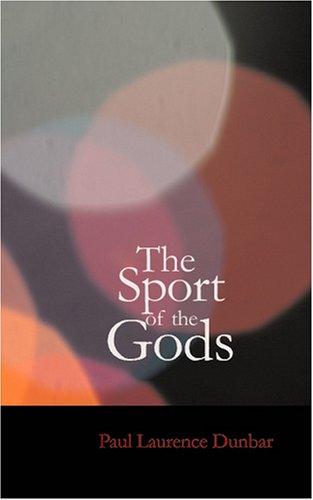
The Sport of the Gods is a novel by Paul Laurence Dunbar, better known as an African-American poet. It's an intense story about an African-American family in the post Civil War era, who are unjustly accused and ostracized for a crime they didn't commit. While the father is imprisoned, the mother, son and daughter are forced to travel north to New York, to pick up the pieces of their lives. The hardships they experience and endure causes drastic, as well as dramatic changes in their values and relationships with each other.
Once the truth is revealed, too much time and events have transpired for everything to return to the way it was before... a happier and more innocent existence for the family and those responsible for the injustices they suffered.
This novel was published in 1902 and it is indeed a classic read. It moves rather effortlessly through different situations and locations, bringing a rythmic blend to details to engage the reader as it pushes the story along. It uncovers the life and prejudices of the idyllic Southern life and juxtaposes this with the harsh realities of the urban North, also with it's own dynamics of prejudices.
Subscribe to:
Posts (Atom)